A Valley Written in Wine
TEXT: ANDREAS KATSHIS / PHOTOS: SILVIO AUGUSTO RUSMIGO
There are places that cannot be easily explained – only passed through. The inland region of Pafos is one of them, and its wine is its purest translation.
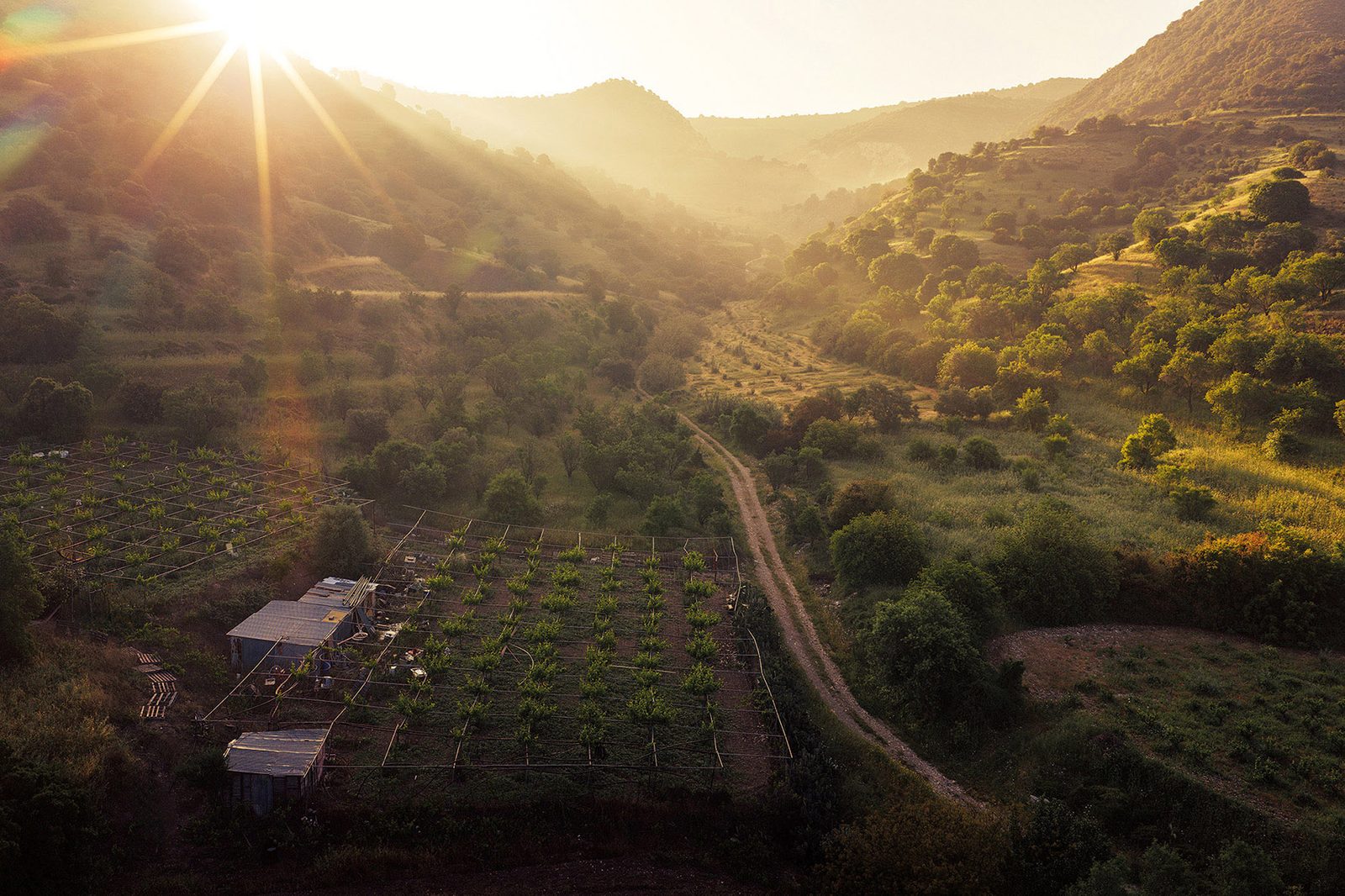 Nicosia, 4:00 in the morning. The photographer’s instructions were more than clear: “We have to catch the sun.” As we drive, gazing out of the window, I find myself recalling memories and images –mostly childhood ones– from earlier visits to the area. How, I wonder, can so much beauty ever be described in words? It is a beauty that reveals itself gradually, as though inviting you to discover it, to listen to it, to truly see it.
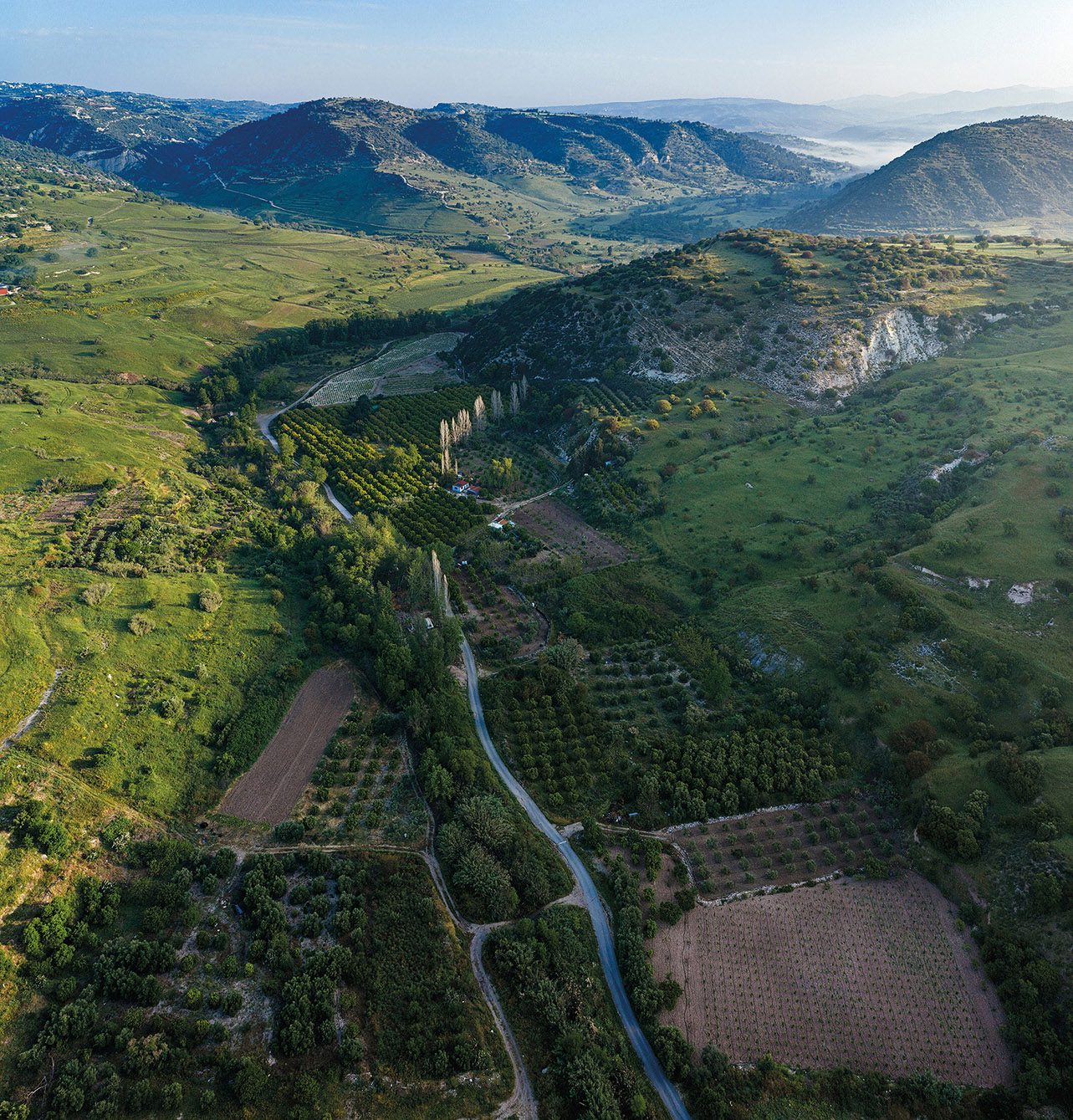
The motorway slips by quickly until, as we enter Episkopi, the view suddenly opens up. The Ezousa Valley stretches out before us in layers that seem endless. Vineyards, hills, natural ravines – fragments of a landscape untouched by time. It is this first encounter that leads many to speak of a little Italy.
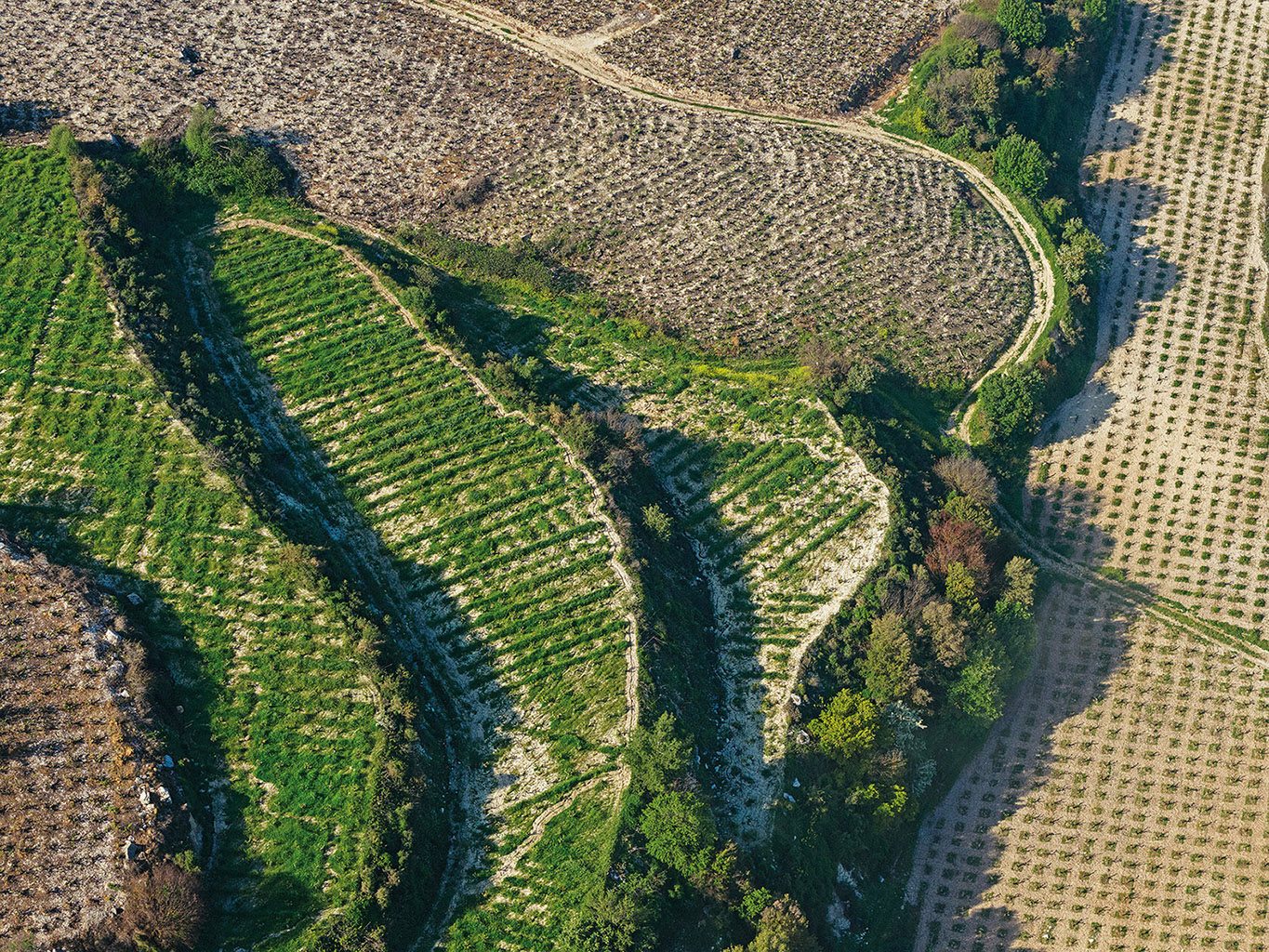
IN THE PAFOS COUNTRYSIDE
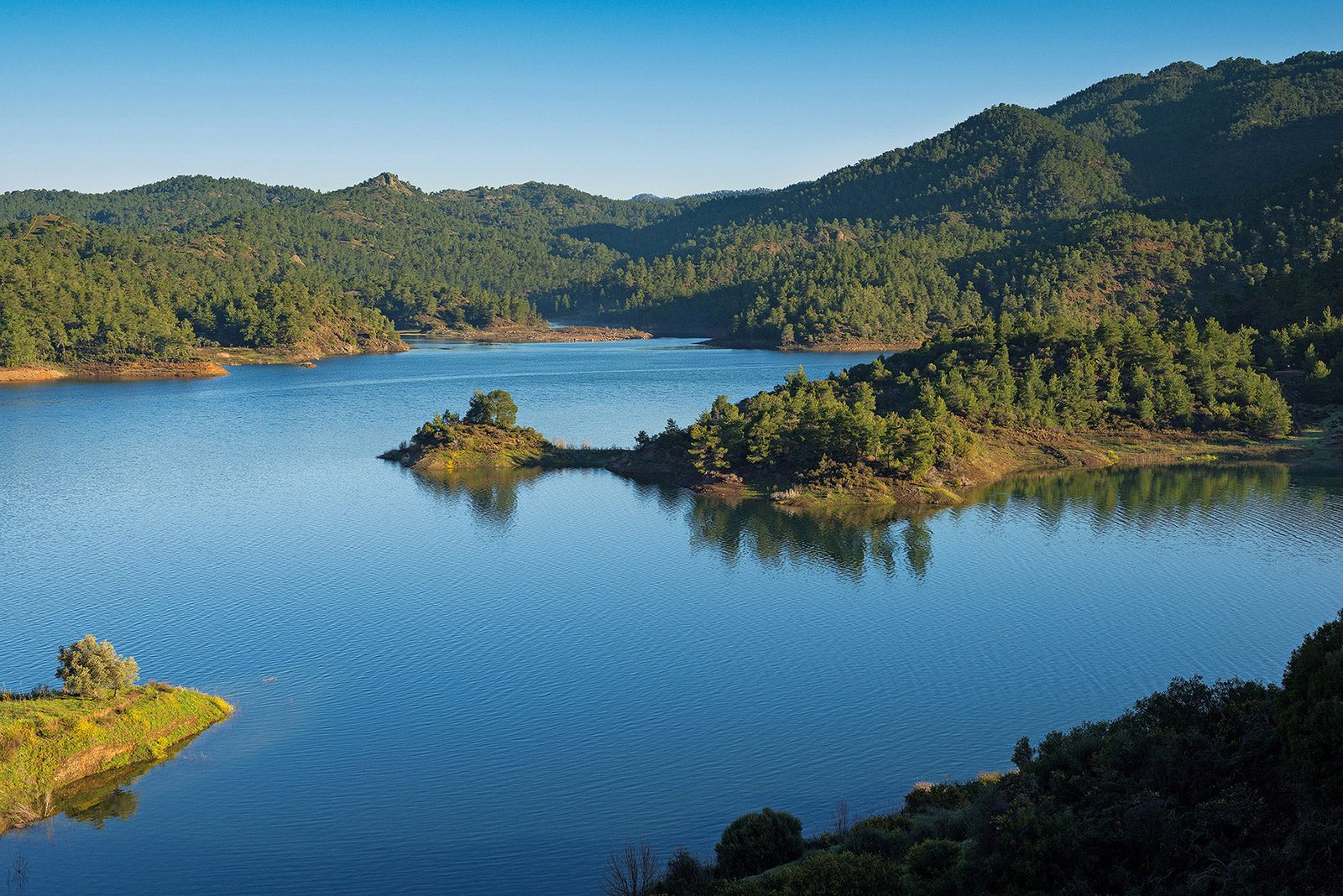
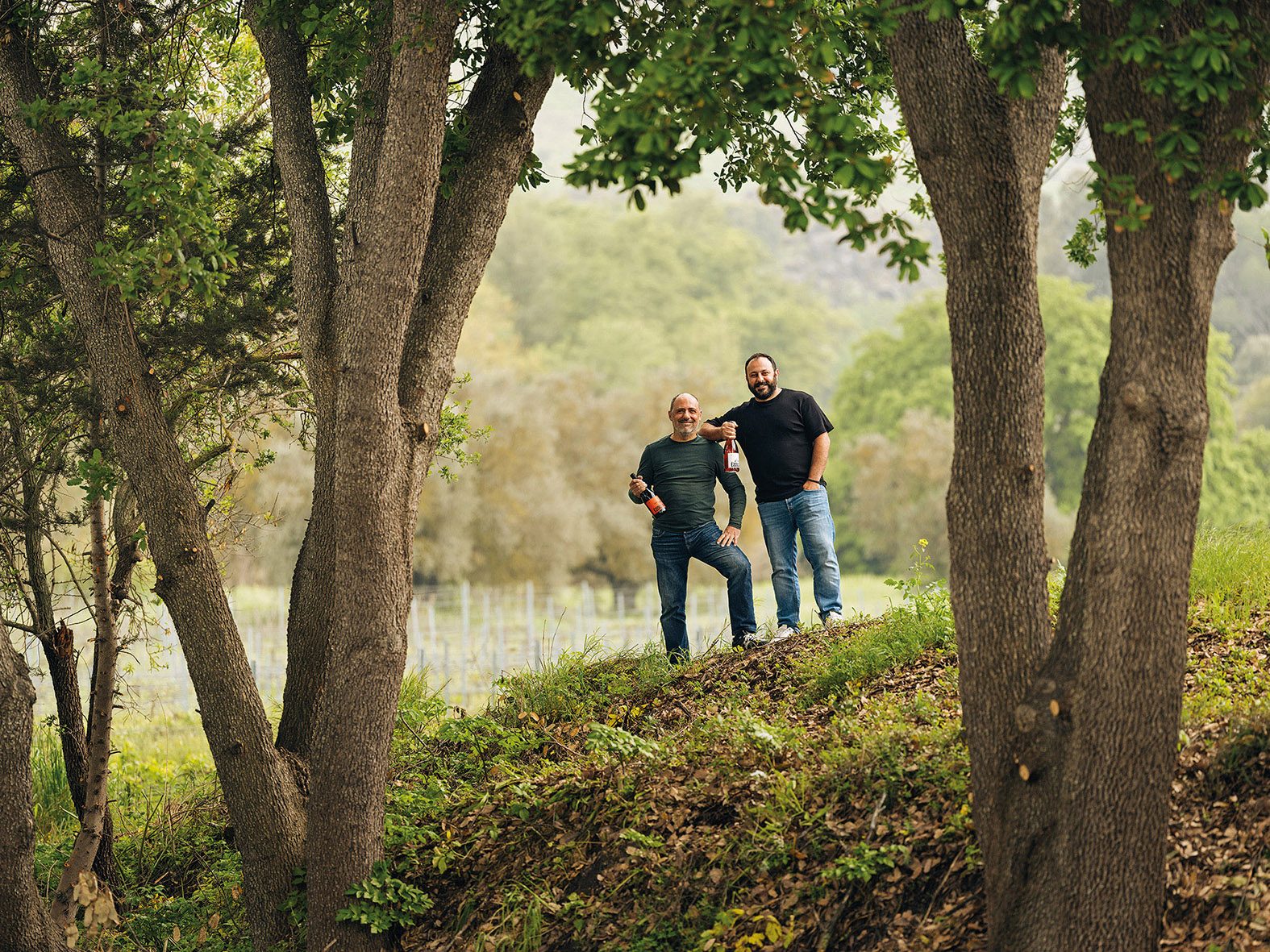 As we leave Episkopi behind and venture deeper into the valley, the landscape grows wilder, more vibrant, coming alive around Kannaviou, the village built along the banks of the Ezousa River. Shortly before reaching Ezousa Winery, we stop at the Asprogia-Kannaviou dam, which, following the unexpectedly generous rains of recent months, has regained its splendour and, without exaggeration, feels like a small paradise. Michalis Constantinides, the winery’s owner, welcomes us as though we have known each other for years. “The frogs you hear here are no coincidence,” he says with a smile. “They are the guardians of the river. As long as they are here, it means everything is functioning as it should.” Standing beside him is the oenologist, Ploutis Sozou, who has been with him almost since the very beginning, back in 2003. We talk about the area’s microclimate, the soil, even the morning mist – all the elements that contribute to the making of a fine wine. “You do not need to intervene much here,” Ploutis remarks. “You simply have to let nature do its work, and it will give you back exactly what you need.”
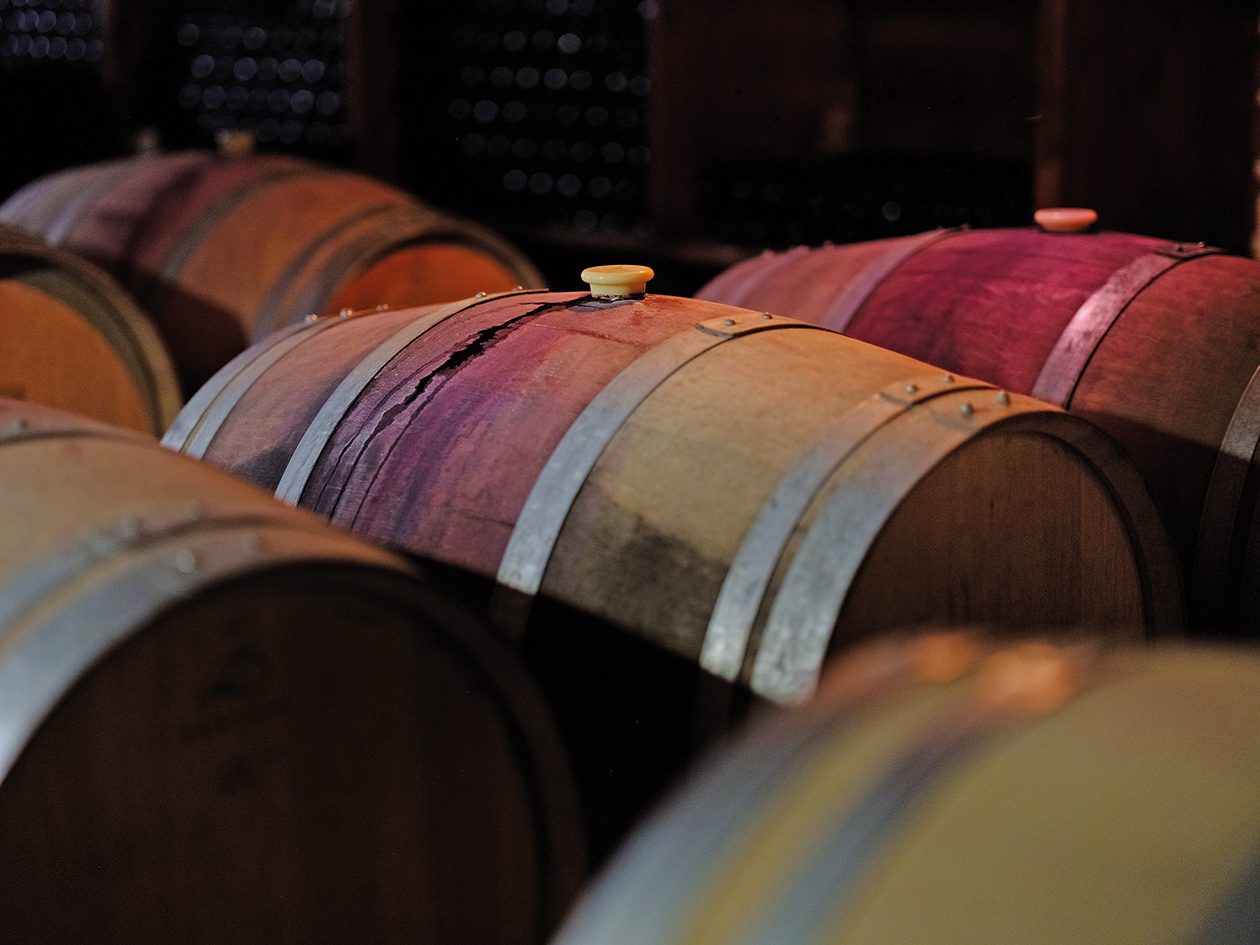
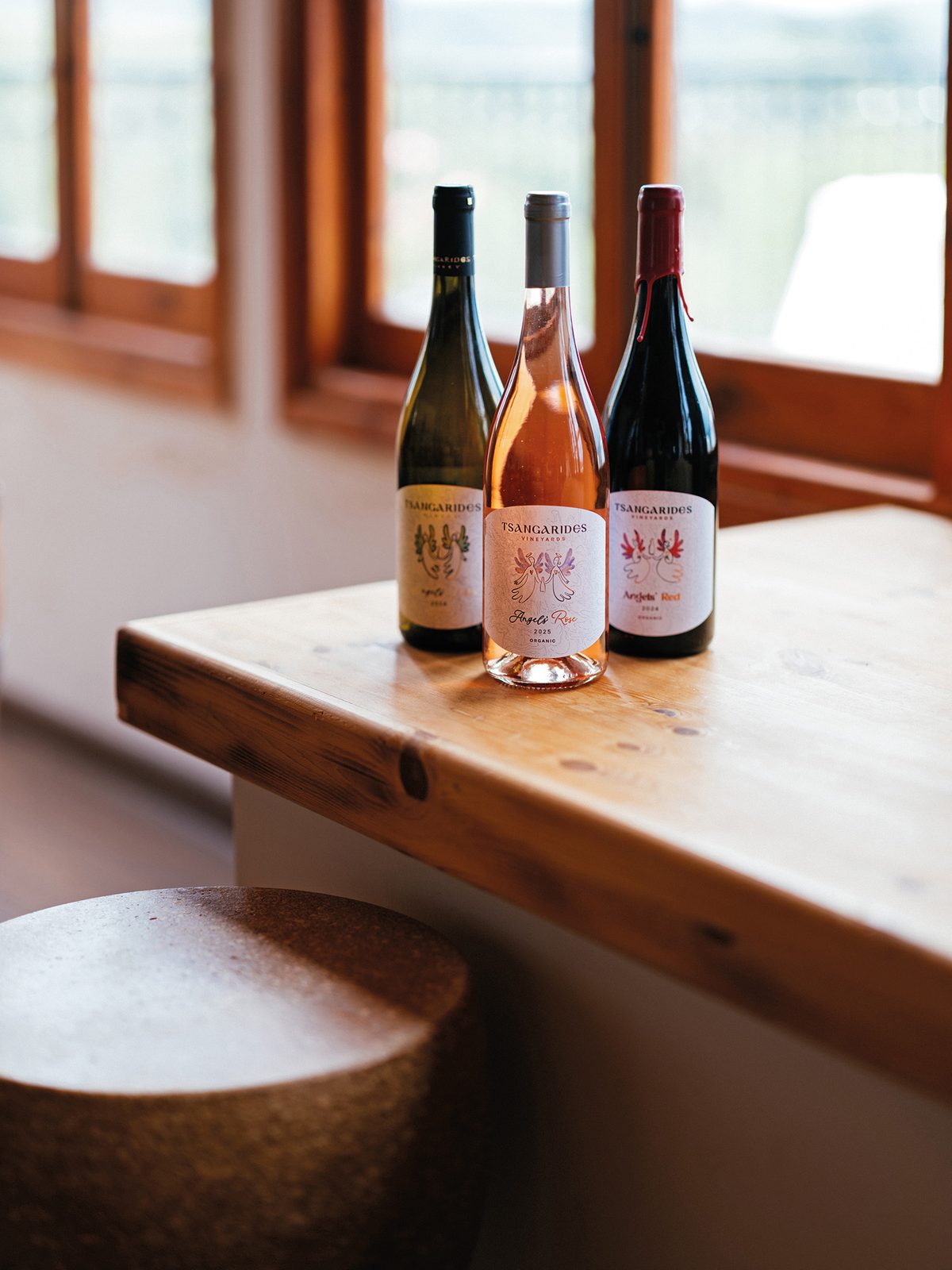
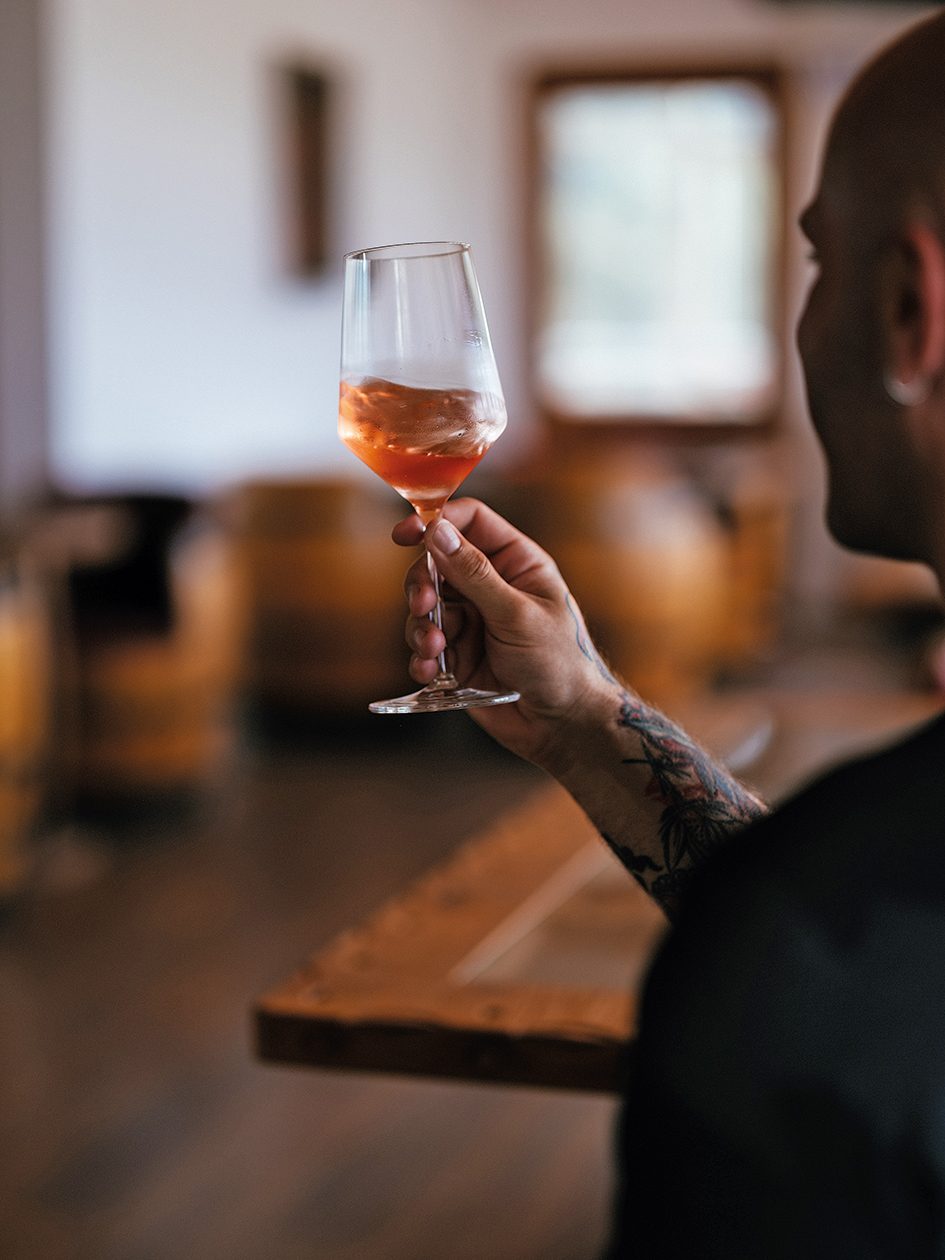
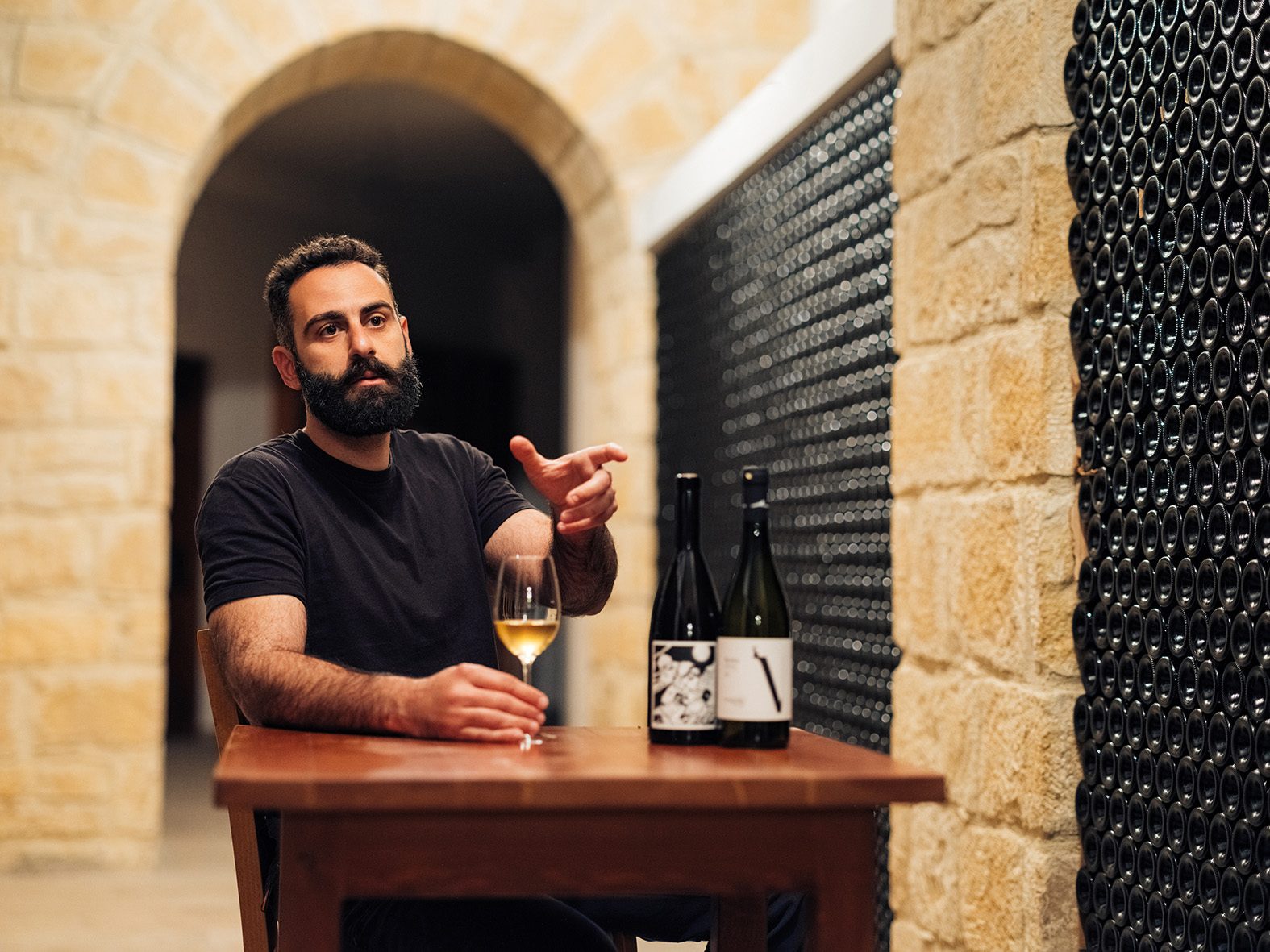
With an Ezousa Palloures and an Ezousa Maratheftiko in hand, we set off for our next destination. As we move on, the vineyards become more numerous, stretching out in symmetrical rows. At Tsangarides Winery, we meet Angelos Tsangarides, part of the new generation of winemakers. He speaks with enthusiasm about everything he and his sister, Loukia, have achieved so far, explaining that through their work they want to demonstrate what Cyprus is capable of in the field of winemaking. We walk among the barrels as he tells us how they decided to carry their family’s legacy forward, bringing it into the present day. “I do not see organic wine as a trend, but as a way of thinking. We chose to respect our land, and it gives that respect back to us.” At the table, we taste the Mataro and the Vasilissa. One fuller-bodied, the other more delicate, yet both unmistakably defined by their own identity.
UP INTO THE MOUNTAINS
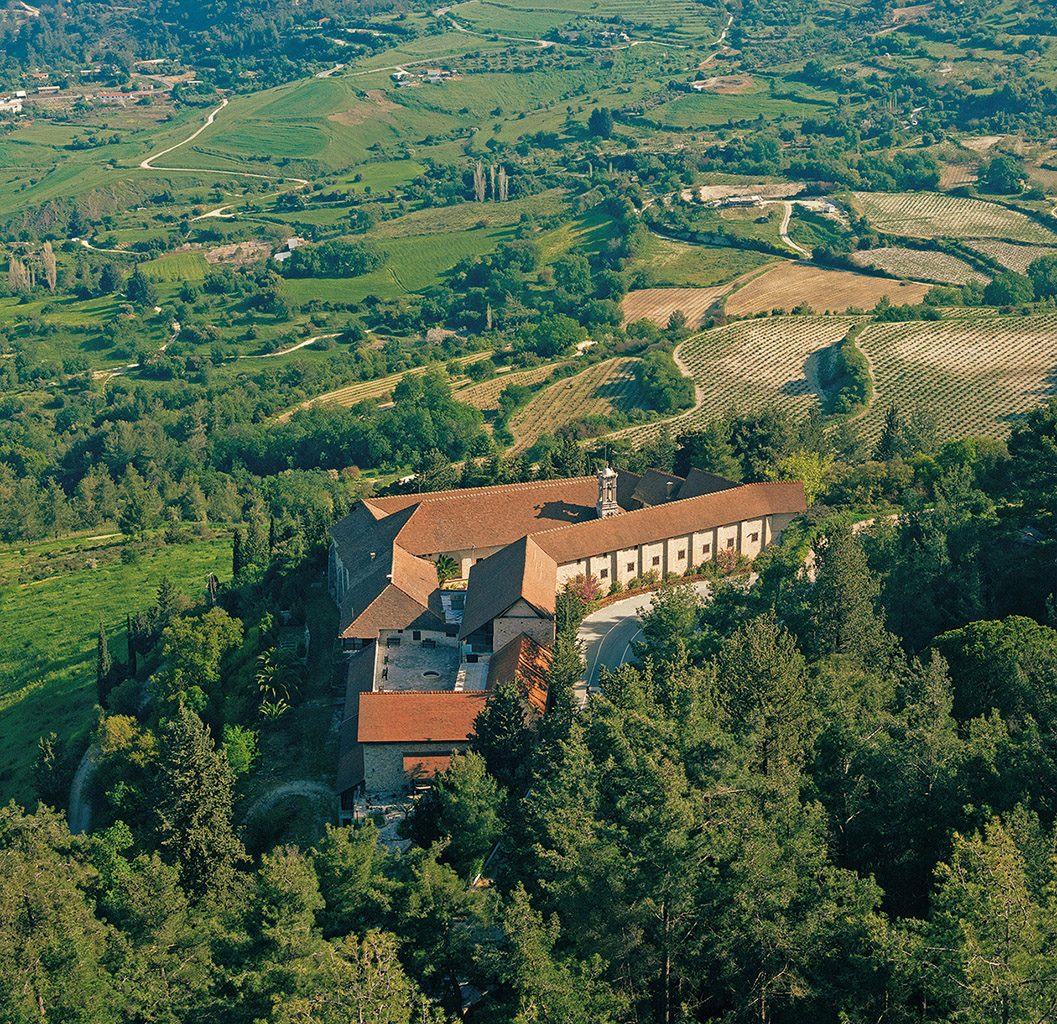
The road continues towards Pano Panayia, the scenery shifting once again, becoming grander, more commanding. Here, at altitudes reaching as high as 1,150 metres, wine takes on another dimension – more structured, more expressive. At Vouni Panayia Winery, history is present in every corner, with nearly forty years of winemaking behind it. “When my father decided to create Cyprus’ first regional family winery back then, everyone wondered what had come over him,” Yiannis Kyriakides tells us. Together with his brother, Pavlos, they took on the task of continuing and evolving their father’s vision. The two brothers, shaped by the influence of Florence and the culture of Tuscany, where they trained, succeeded in elevating their wines while preserving their connection to tradition.
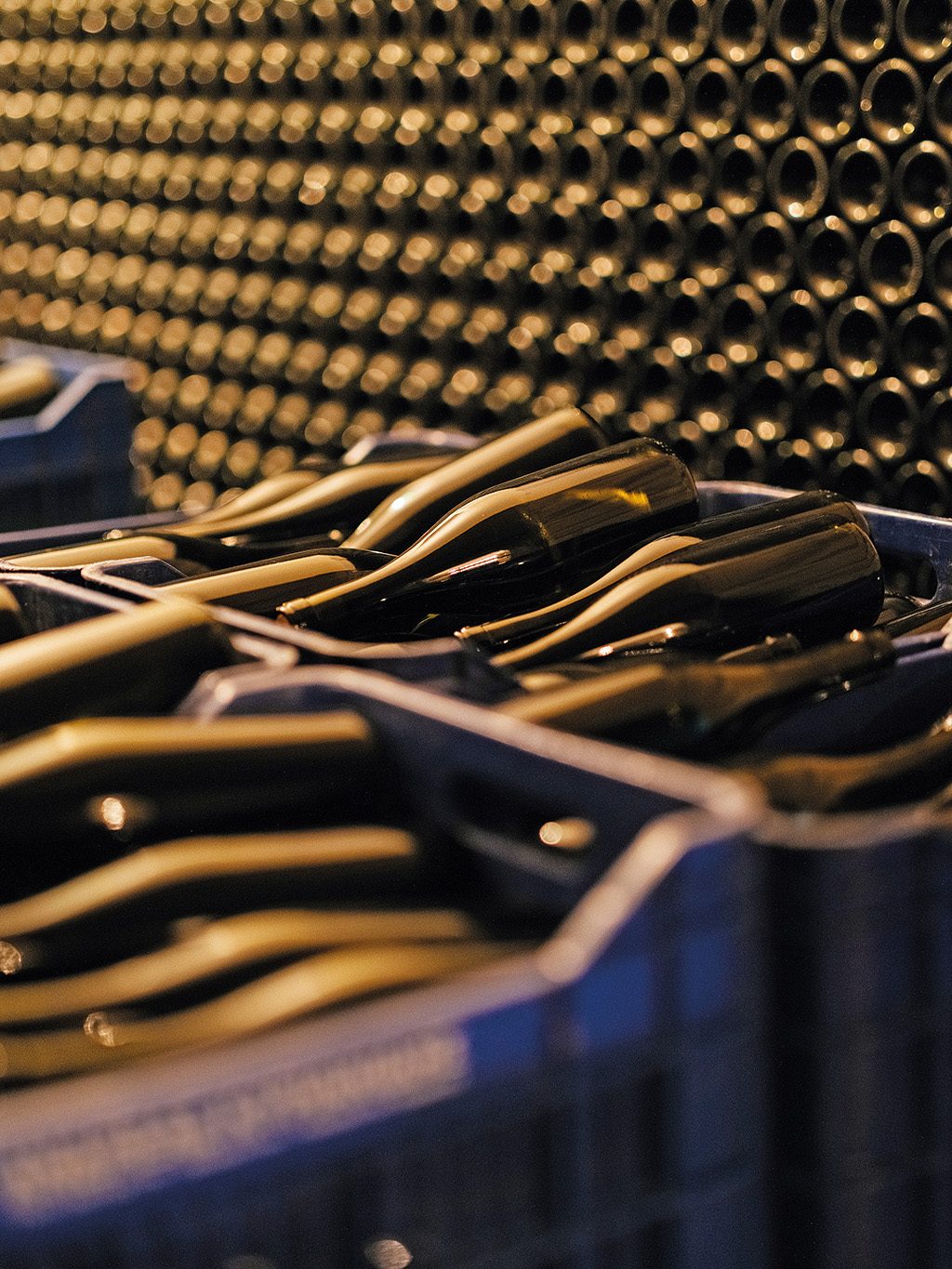
“From the very beginning, our aim –our vision– was to marry experience with innovation,” Yiannis notes, his gaze betraying the pride he feels in everything they have achieved so far. As we sit at the tasting table sampling Morokanella, Promara and Vasilissa from the white varieties, I ask Yiannis whether the local market has finally embraced Cyprus’ indigenous grapes. “Now it certainly has,” he replies without a trace of hesitation. “In recent years, Cypriot varieties such as Xynisteri, Morokanella, Promara, Spourtiko and Vasilissa among the whites, and Mavro, Yiannoudi and Maratheftiko among the reds, have been fully embraced by the local market. You will find them not only in restaurants and bars – many people now choose to buy them for home as well. And that is the most important thing, because these are not simply varieties that adapted to our land. They are our land itself.”
 A DETOUR TO LETYMBOU
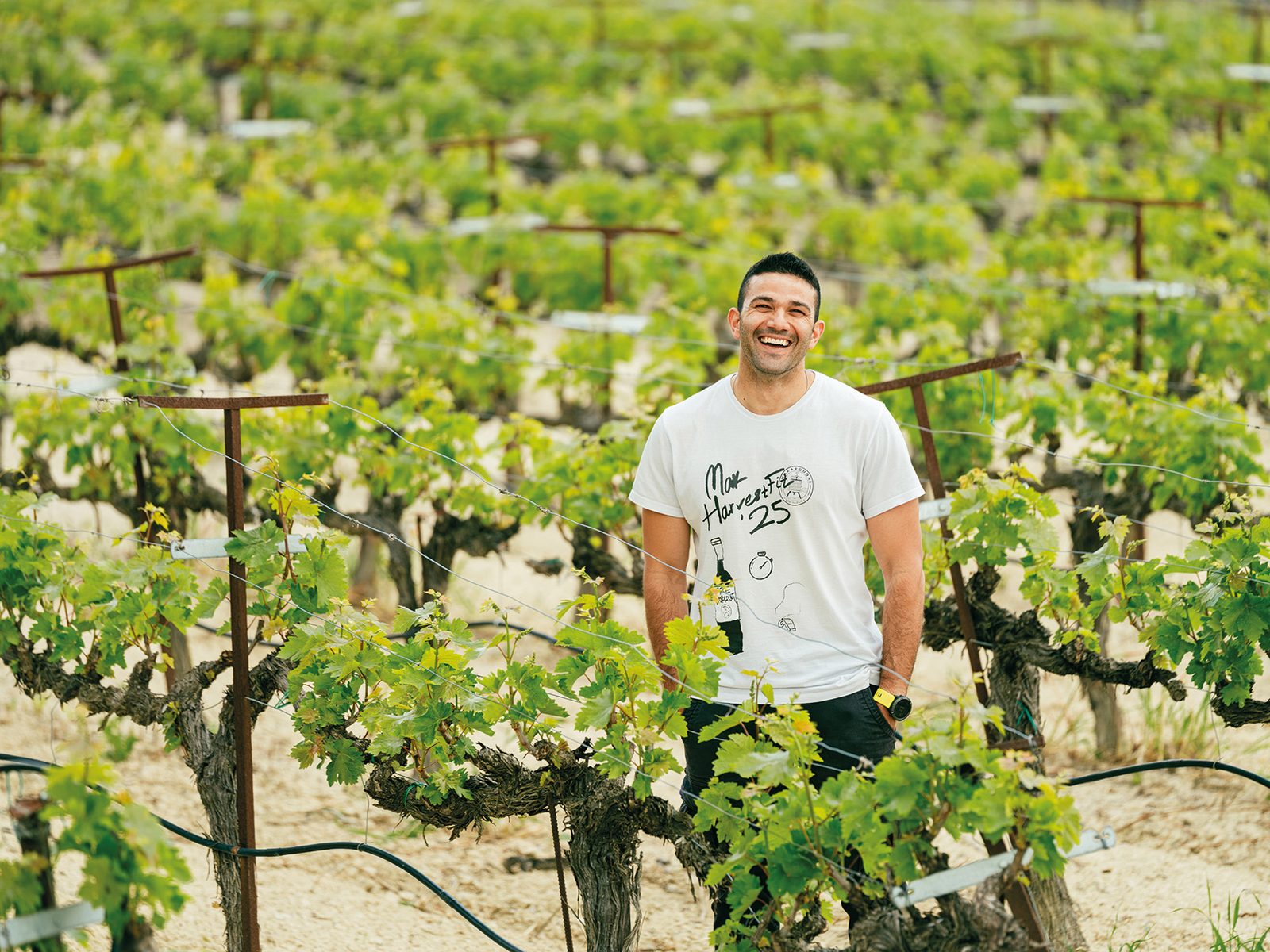
 We arrive in Letymbou and find ourselves standing before Makarounas Vineyards, a winery with a story of its own – one that Theodoros Makarounas recounts each time with the very same enthusiasm. “I began making wine while I was studying Electrical Engineering. My parents had started it as a hobby, and somehow that gave me the space to become involved as well. Along the way, I realised this was what I truly wanted to do. I attended courses, gained knowledge, and with my family’s support –and above all their encouragement– I decided to create my own winery.” As we taste the Vasilissa, he explains that he approaches the winemaking process in much the same way a chef approaches his dishes. “Our wines contain us. When you taste a wine, it is as though you are tasting the winemaker himself – his character, his choices, the things he loves.” Now in its ninth year, Makarounas winery pro-duces around 135,000 bottles annually. Forty-five per cent remains in Cyprus, while the rest is exported –primarily to the United States– with white varieties such as Vasilissa, Promara and Morokanella leading the way, alongside reds such as Yiannoudi. “We have nothing to envy from abroad,” he tells us, referring to the broader evolution of Cypriot wine in recent years. And indeed, as he explains, the transformation is unmistakable: fifteen years ago the picture was very different, but the emergence of small, quality-driven wineries gradually changed the landscape – and with it, the attitude of Cypriots themselves, who now consciously choose local wine.
 As we leave the valley behind, I feel as though I have discovered another Cyprus –quieter, more meaningful, more authentic– one that compels you to return for the sake of its simplicity.