


The Meze Experience
Text: Marilena Joannides / Photos: Antonis Farmakas / Food Styling: Laoura Colocasides
In Cyprus, every meal unfolds with small dishes following one another, each telling part of a larger cultural story. Here, food is a journey in itself.
There are destinations you remember for their landscapes, and others you carry with you for their flavours. In Cyprus, the two become one. The moment you arrive on the island, it’s not just sun and sea that await you, but a culture deeply rooted in gastronomy. The local cuisine is not simply food – it is memory, history, and an entire way of life.
In the old days, meze was a simple appetiser of just a few olives, some halloumi, a piece of cured pork, or whatever happened to be available at home, always accompanied by freshly baked bread offered to the guest –the ‘stranger’, as they are still called today– until the main meal was ready. Hospitality has always been an integral part of the island, dating back to ancient times, when Zeus Xenios was considered the protector of every visitor. The term ‘meze’ most likely comes from the Persian word mazze, meaning small appetiser dishes. From there, it passed into the Arab world and eventually reached Cyprus, where over time it developed its own distinctly Cypriot identity.
Today, the meze experience unfolds through a generous succession of small dishes, often seeming endless as they arrive one after another at the traveller’s table within a single meal. This reflects the warmth and generosity of the locals and their eagerness to offer food abundantly to their guests. At the same time, it gives visitors the opportunity to sample a wide variety of traditional flavours and discover the full richness of the local cuisine.
Α meze meal always begins with tahini dip, a creamy blend of tahini, lemon, and garlic; talatouri, the local version of tzatziki, made with sheep’s yoghurt, cucumber, and dried mint; crushed olives with coriander; a Cypriot salad of fresh vegetables, tomato, and cucumber; and, of course, sourdough bread or soft sesame bread rings sprinkled with black cumin seeds. Often, additional dips are served too, such as hummus, aubergine, or spicy feta spread, along with potato or beetroot salad. And yet, what might already seem like a complete meal is only the beginning.
What follows is the king of Cypriot gastronomy: halloumi, the island’s national cheese. It is served in slices, grilled over charcoal or on a hot plate, often accompanied by traditional wine-infused sausages. Then come grilled mushrooms, courgettes with eggs, ravioli filled with halloumi, or rustic pasta topped with grated anari cheese. Depending on the scale of the meze, dishes such as lamb liver, bulgur pilaf cooked with tomato and served with sheep’s yoghurt, and pork afelia braised in red wine may also be added. In season, these are accompanied by okra or fresh green beans, as well as karaoli – snails cooked with tomato or served with pilaf. These are simple, authentic dishes that win you over from the very first bite, built on the purity of their ingredients and gentle cooking techniques that preserve their character – the kind born of the Cypriot land and its strong Mediterranean sun.
And because at traditional tables food never comes alone but is always accompanied by stories, let us mention one found in a medieval folk poem. It tells of a mythical, gigantic hero who, in order to be satisfied, requires enormous quantities of food – so much that our meze would not suffice even as a mere appetiser. And so, as we continue eating, we move on to the main dishes.
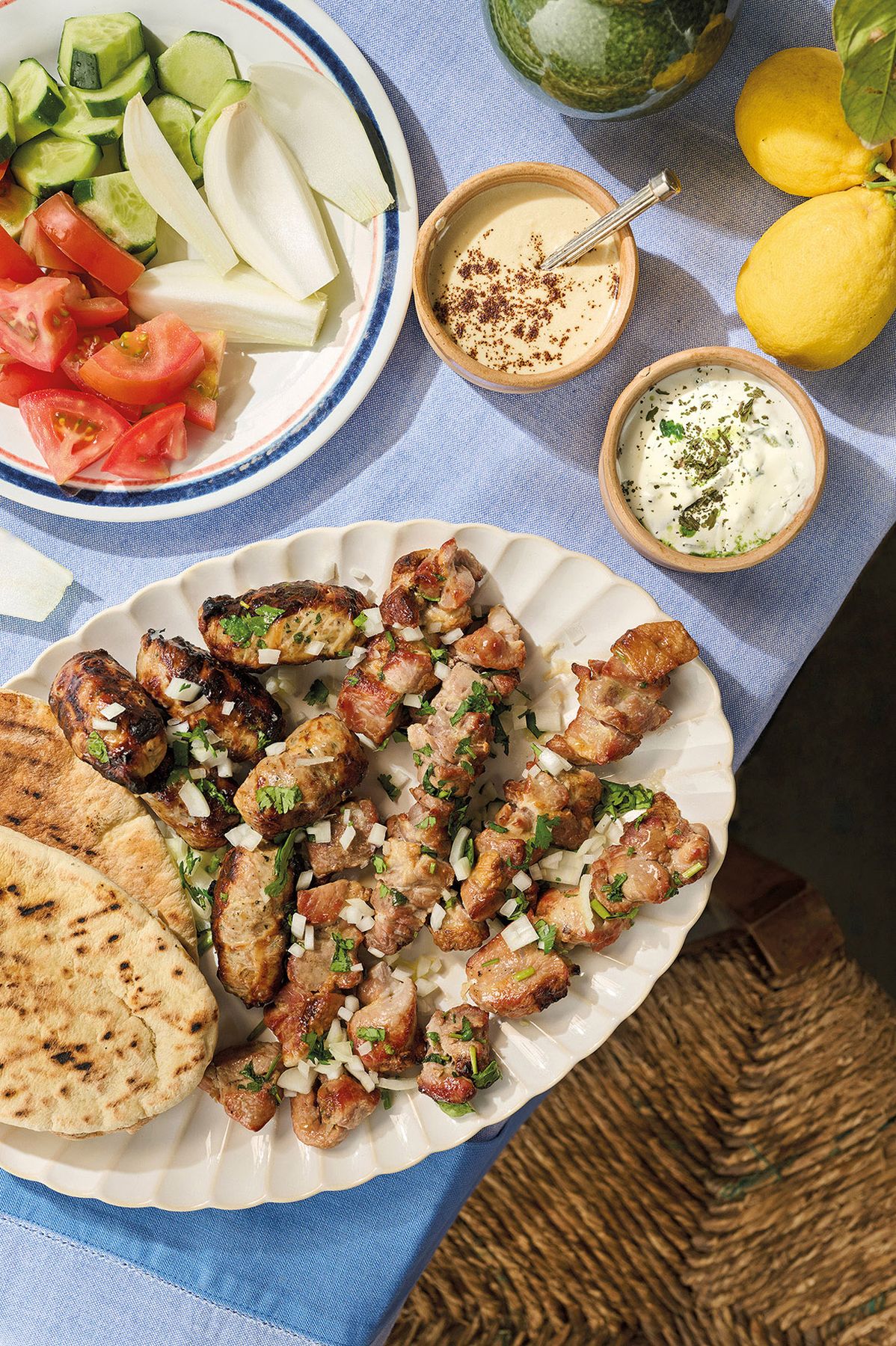
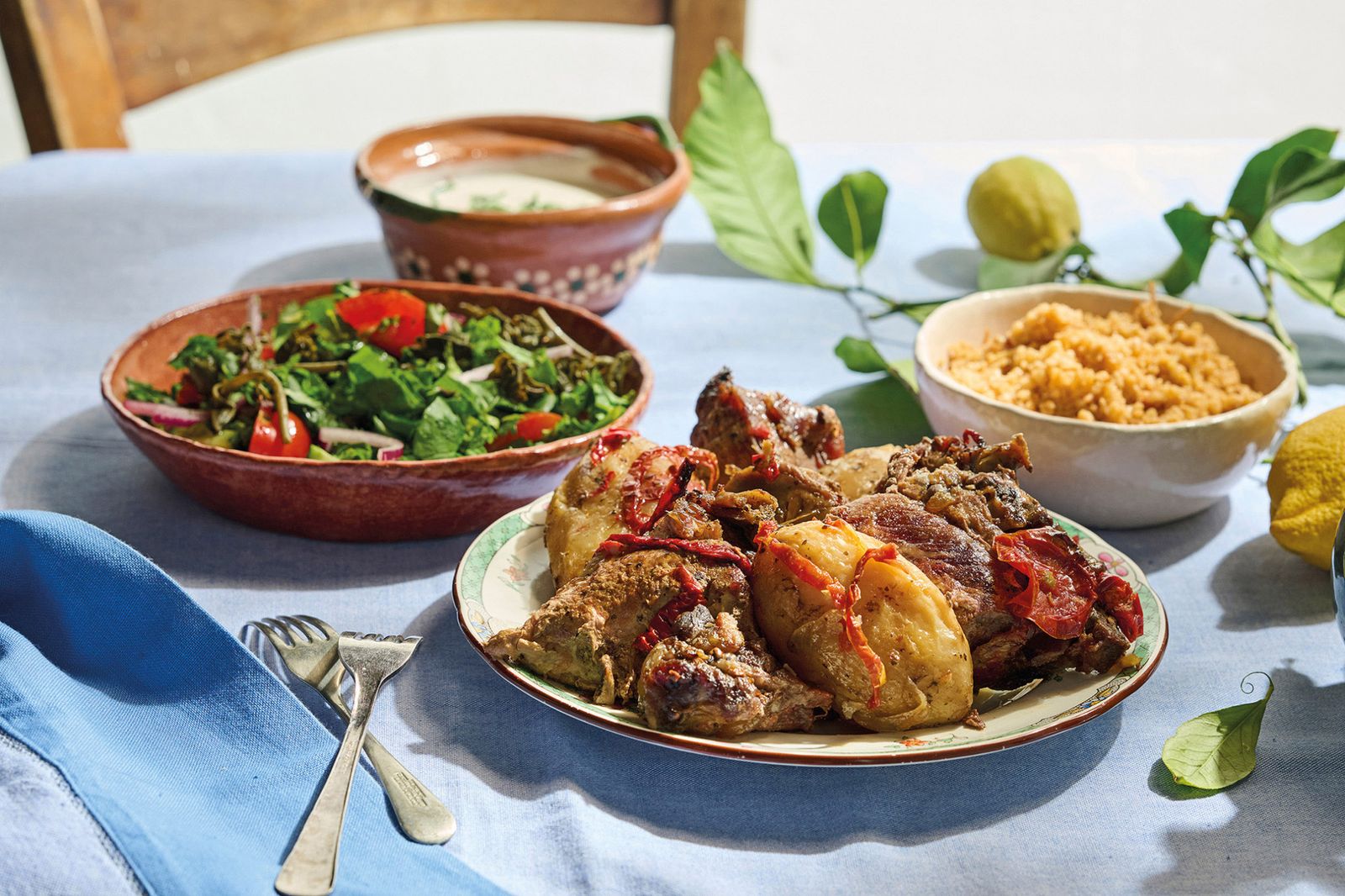 The meal continues with souvlakia and sheftalies. Here, souvlakia are made with pork, while sheftalies (traditional sausages) are served simply with a squeeze of lemon, Cypriot pita, and parsley salad. This is followed by pastitsio (oven-baked macaroni), koupepia (vine leaves stuffed with minced meat), tavas (pieces of lamb cooked with vegetables, rice, and cumin in a clay pot in a wood-fired oven), or souvla, usually made with lamb on a roasting spit, though often also with pork marinated in dry red wine. Souvla keeps alive an ancient roasting technique, much like ofto (slow oven-baked meat), which often replaces it. Today, one can also try different variations of ofto such as teratsia, cooked over carob wood, syrto, prepared in a small wood-fired clay oven, or kleftiko, slow-cooked in a traditional oven using a method reminiscent of that of the klephts. The island’s famous potatoes –whether fried, oven-baked with tomato, bay leaf, cinnamon, and black pepper, or antinahtes, small whole potatoes first fried and then roasted with coriander and red wine– always accompany the meat dishes and complete the main dishes perfectly.
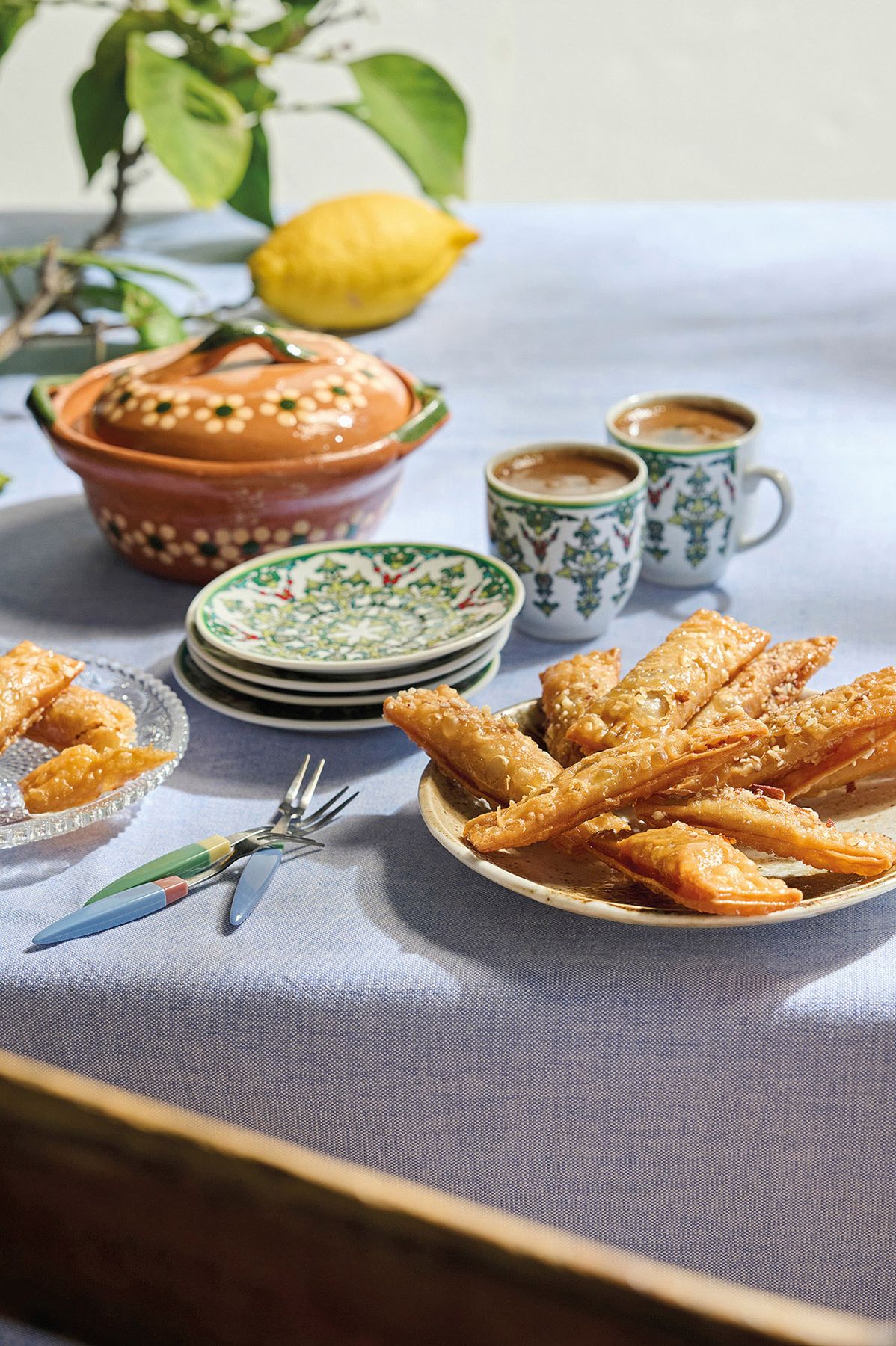
The meze experience is, of course, completed with dessert. Alongside fresh fruit –typically watermelon, melon, or grapes in the summer– come traditional sweets: daktyla and bourekia pastries (the latter filled with anari), samali (syrup-soaked cake), semolina halva, or spoon sweets such as walnut, bergamot, or cherry.The meal closes with a flavour that feels both familiar and deeply authentic. Because Cyprus is not just a destination, but something you experience with all your senses and carry with you on the journey home – a feeling that lingers and makes you want to return and savour it all over again.

